

Why Buying an Under-Construction Property Is a Smart Move in Real Estate
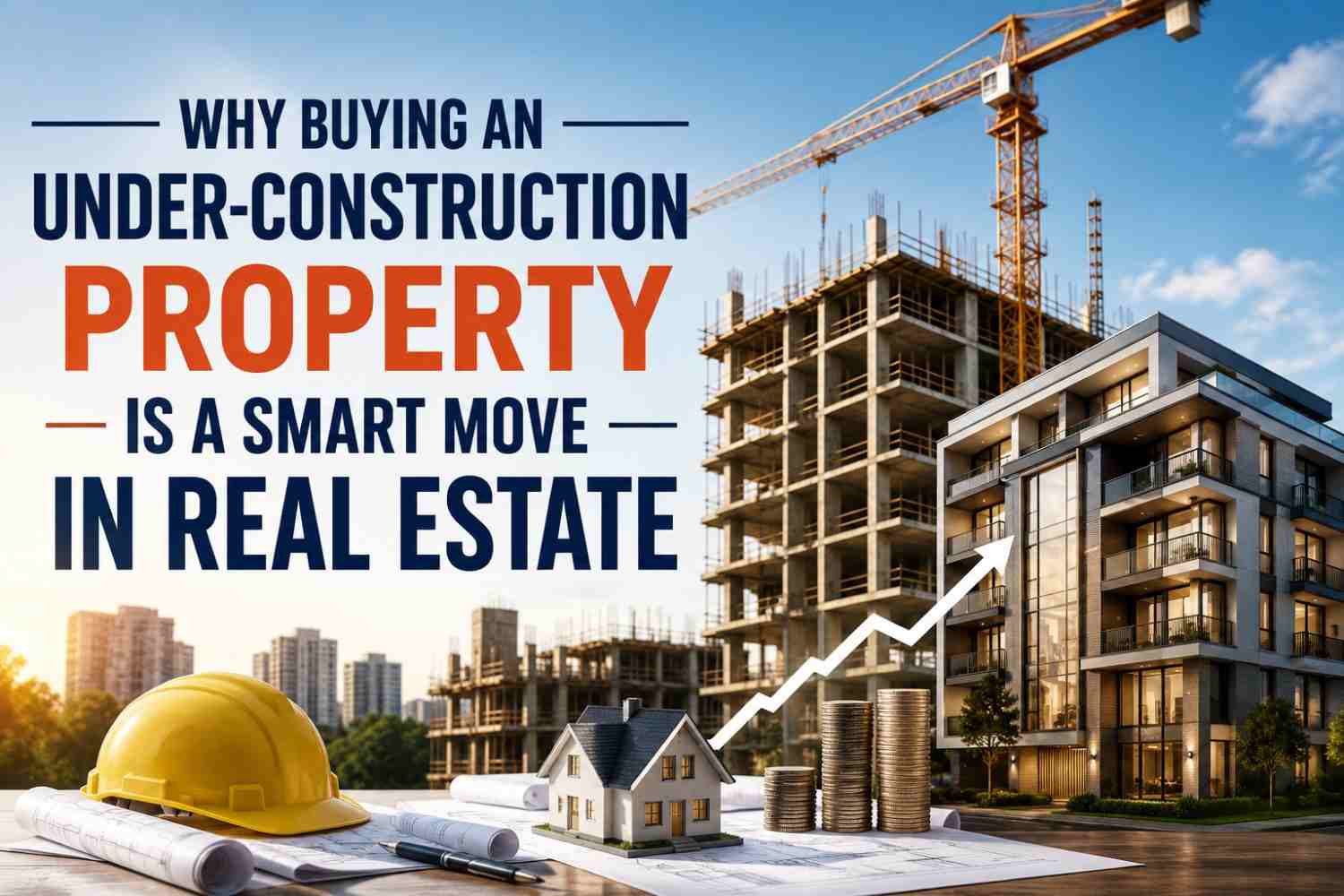
Buying a property is one of the biggest financial decisions you can make. For many homebuyers and investors, the choice is not only between different locations or property types but also between a ready-to-move property and an under-construction property. An under-construction property is one that is still being built but is already available for sale.
For buyers who are not in a hurry to move into their new home, an under-construction property can offer several potential advantages. Lower initial costs, flexible payment plans, customization opportunities, appreciation potential, modern features, and the possibility of rental income are some of the reasons buyers consider this type of real estate investment.
Here are some important reasons why buying an under-construction property can be a smart move in real estate.
1. Lower Initial Cost
One of the major benefits of buying an under-construction property is the possibility of securing the property at a lower price.
Developers often provide attractive offers during the launch or early stages of a project. Early buyers may have access to introductory prices, early-bird discounts, and other benefits.
Buying at an earlier stage can therefore provide an opportunity to secure a property before prices increase as construction progresses.
For investors, the initial purchase price is particularly important because it can have a direct impact on the potential return on investment.
2. Flexible Payment Plans
Another important advantage of under-construction properties is flexible payment options.
Unlike some ready-to-move properties where a significant amount may be required within a short period, under-construction projects can provide payment schedules linked to the progress of construction.
A buyer may pay an initial amount to book the property and then make additional payments according to the agreed construction schedule.
This can make it easier for some buyers to plan their finances while the property is being developed.
However, buyers should carefully understand the payment schedule, agreement terms, and all costs before committing to a purchase.
3. Potential for Property Appreciation
Appreciation potential is one of the key reasons investors consider pre-construction and under-construction real estate.
When a project is purchased during its earlier stages, the surrounding area may continue to develop while construction is taking place. New infrastructure, roads, businesses, schools, transportation facilities, and other developments can contribute to the growth and desirability of an area.
As the project moves closer to completion and the surrounding neighbourhood develops, property values may increase.
This creates the potential for buyers who entered the project early to benefit from appreciation.
Of course, property appreciation is never guaranteed, and buyers should evaluate the location, market conditions, project quality, and developer before making an investment decision.
4. Customization and Personalization
An under-construction property can provide buyers with opportunities for personalization.
When purchasing a completed property, the layout, fixtures, finishes, colours, and other features are generally already established.
With an under-construction property, depending on the stage of construction and the developer's policies, buyers may have the opportunity to select certain finishes, fixtures, materials, or other features.
This can allow homeowners to create a property that better reflects their preferences and lifestyle.
Customization can be particularly attractive to buyers who want a modern home without having to undertake major renovations immediately after purchasing.
5. Brand-New Features and Modern Design
New properties are generally designed according to modern expectations.
Under-construction homes may include contemporary floor plans, modern kitchens, updated bathrooms, newer appliances, energy-efficient features, and other amenities.
Buyers can therefore benefit from a property that reflects current design preferences rather than having to update an older home.
New construction can also mean fewer immediate repair and replacement requirements compared with an older property, although every home will still require regular maintenance.
6. Lower Maintenance and Repair Requirements
A newly constructed property can offer the advantage of having new major components and systems.
When purchasing an older property, buyers may need to consider the remaining life of the roof, plumbing, electrical systems, windows, heating and cooling equipment, and other components.
With a new property, many of these elements are new at the time of possession.
This can potentially reduce the need for major repairs during the early years of ownership.
For buyers who prefer a home with modern systems and fewer immediate renovation requirements, an under-construction property can be an attractive option.
7. Possibility of Rental Income
An under-construction property can also be considered as an investment for future rental income.
If the property is located in an area with strong rental demand, the completed home may provide an opportunity to generate rental income.
Growing urban areas, developing neighbourhoods, and locations with access to employment, transportation, education, and amenities can attract tenants.
Investors can therefore consider both potential property appreciation and future rental income when evaluating an under-construction property.
However, rental demand should be researched carefully rather than assumed.
8. Opportunity to Invest in a Developing Area
Under-construction projects are often located in developing areas where infrastructure and communities are still expanding.
Investing in such an area can provide an opportunity to participate in its growth.
New roads, commercial spaces, schools, transportation connections, recreational facilities, and other infrastructure can increase the convenience and desirability of a location.
For a long-term investor, understanding the future development plans of the surrounding area can be just as important as evaluating the property itself.
9. New-Home Benefits
Buying an under-construction property means purchasing something that is being developed specifically for today's buyers.
Modern layouts, contemporary amenities, new fixtures, and updated design can make the property appealing to both homeowners and future buyers.
A new home may also have fewer signs of previous use compared with a resale property.
For people who want the experience of owning a brand-new property, an under-construction project can provide that opportunity once construction is completed.
10. Potential Long-Term Investment Opportunity
Real estate investment is generally considered with a long-term perspective.
An under-construction property can provide an opportunity to enter the market earlier, potentially benefit from development in the surrounding area, and hold the property for future appreciation or rental income.
The combination of an early purchase price, flexible payment structure, modern construction, and potential appreciation can make under-construction properties attractive to certain investors.
Nevertheless, investors should always consider their own financial position, investment horizon, risk tolerance, and the specific project before making a commitment.
What Should Buyers Consider Before Buying?
Although under-construction properties can provide several benefits, buyers should not make a decision based only on the potential advantages.
Before purchasing, consider the developer's reputation, project location, construction progress, payment schedule, agreement terms, expected completion timeline, available amenities, and potential future development.
It is also important to understand all applicable costs and financing requirements.
Buyers should review the documentation carefully and seek professional advice where necessary.
The success of an under-construction investment depends on more than simply purchasing early. The project itself, developer reliability, location, market demand, and financial planning all matter.
Under-Construction vs. Ready-to-Move Property
The decision between an under-construction and ready-to-move property ultimately depends on the buyer's priorities.
A ready-to-move property may be more suitable for someone who needs immediate possession and wants to see the completed property before purchasing.
An under-construction property may be more suitable for someone who can wait and is interested in potential early pricing, flexible payments, customization, modern features, and long-term appreciation potential.
Neither option is automatically better for every buyer.
Final Thoughts from Jag Sidhu
Buying an under-construction property can be a smart real estate move for buyers who understand both the opportunities and the risks.
The potential benefits include lower initial pricing, flexible payment plans, customization, modern features, lower early maintenance requirements, potential rental income, and property appreciation.
However, the right investment requires careful research. A promising project in the wrong location or with an unreliable developer may not deliver the expected results.
As Jag Sidhu, my advice to buyers is to look beyond the attractive launch price and evaluate the complete opportunity. Study the location, understand the development plans, research the developer, review the agreement, calculate the total investment, and make sure the property fits your long-term financial goals.
An under-construction property can offer an opportunity to enter real estate early, but smart investing comes from making an informed decision rather than simply buying because a project is new.
When carefully selected and properly evaluated, an under-construction property can become more than just a future home—it can become a long-term real estate asset.
FAQs
1. What is an under-construction property?
An under-construction property is a residential or real estate project that is still being built but is already available for buyers to purchase.
2. What is the main advantage of buying an under-construction property?
Potential advantages include lower initial pricing, flexible payment plans, customization opportunities, modern features, and potential appreciation as the property and surrounding area develop.
3. Can an under-construction property provide rental income?
Yes, once construction is completed and the property is suitable for occupancy, it may be rented out. Rental potential depends on location, property type, local demand, and market conditions.
4. Is buying an under-construction property risk-free?
No. Buyers should consider construction delays, developer reliability, market conditions, financing requirements, and other project-specific risks before investing.
5. Can buyers customize an under-construction property?
Depending on the project's construction stage and the developer's policies, buyers may be able to select certain fixtures, finishes, or other features.
6. Is an under-construction property better than a ready-to-move property?
There is no universal answer. Buyers who want immediate possession may prefer ready-to-move properties, while those who can wait may prefer the potential pricing, customization, payment flexibility, and appreciation opportunities of an under-construction property.

Jag Sidhu Personal Real Estate Corporation
Copyright © 2026 Jag Sidhu Personal Real Estate Corporation. All Rights Reserved
Powered by: genius office